

Field Study: Cobá, MX
TX_003 A city written into the landscape.
At Cobá, communication was built into the landscape.
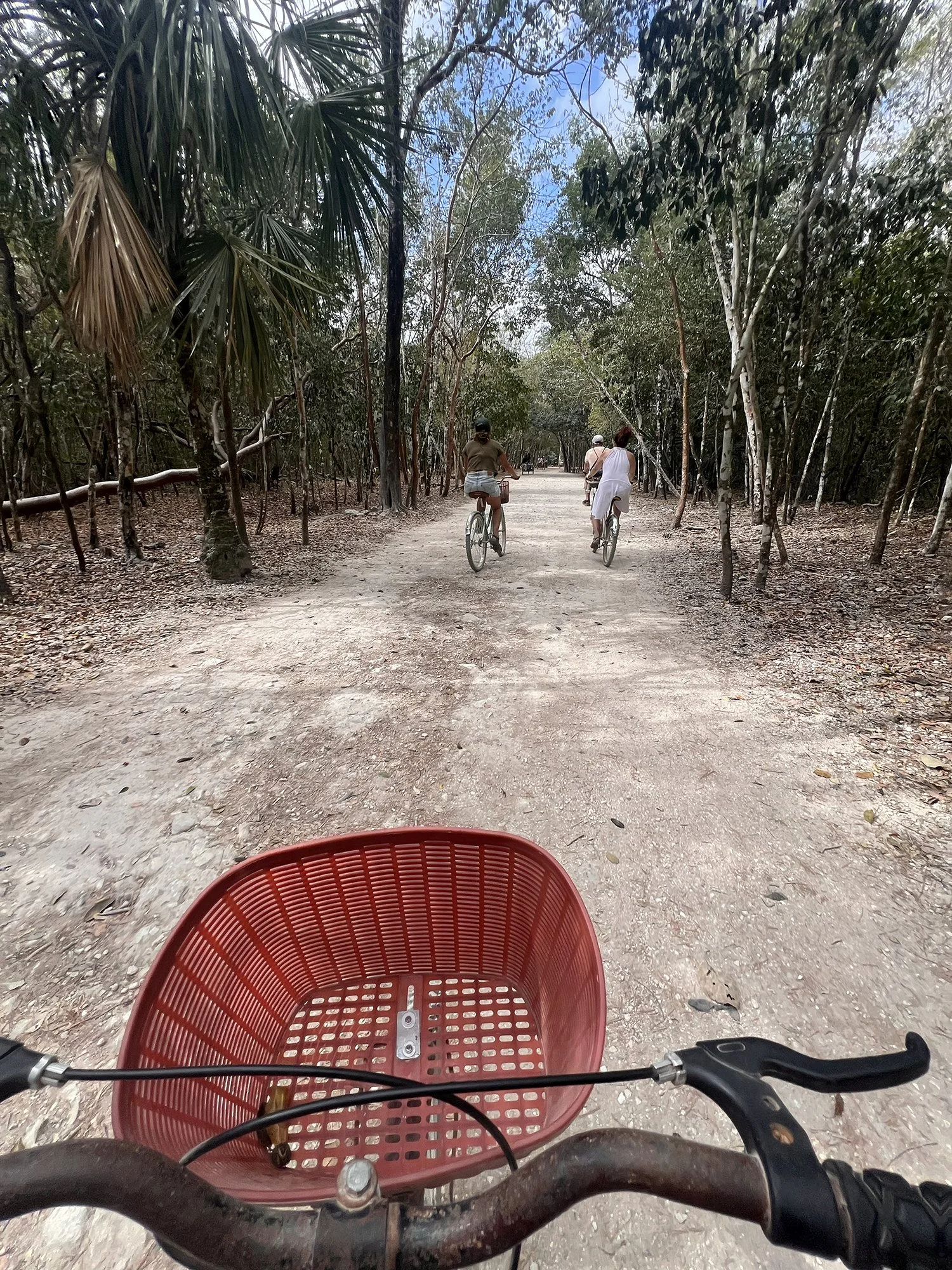
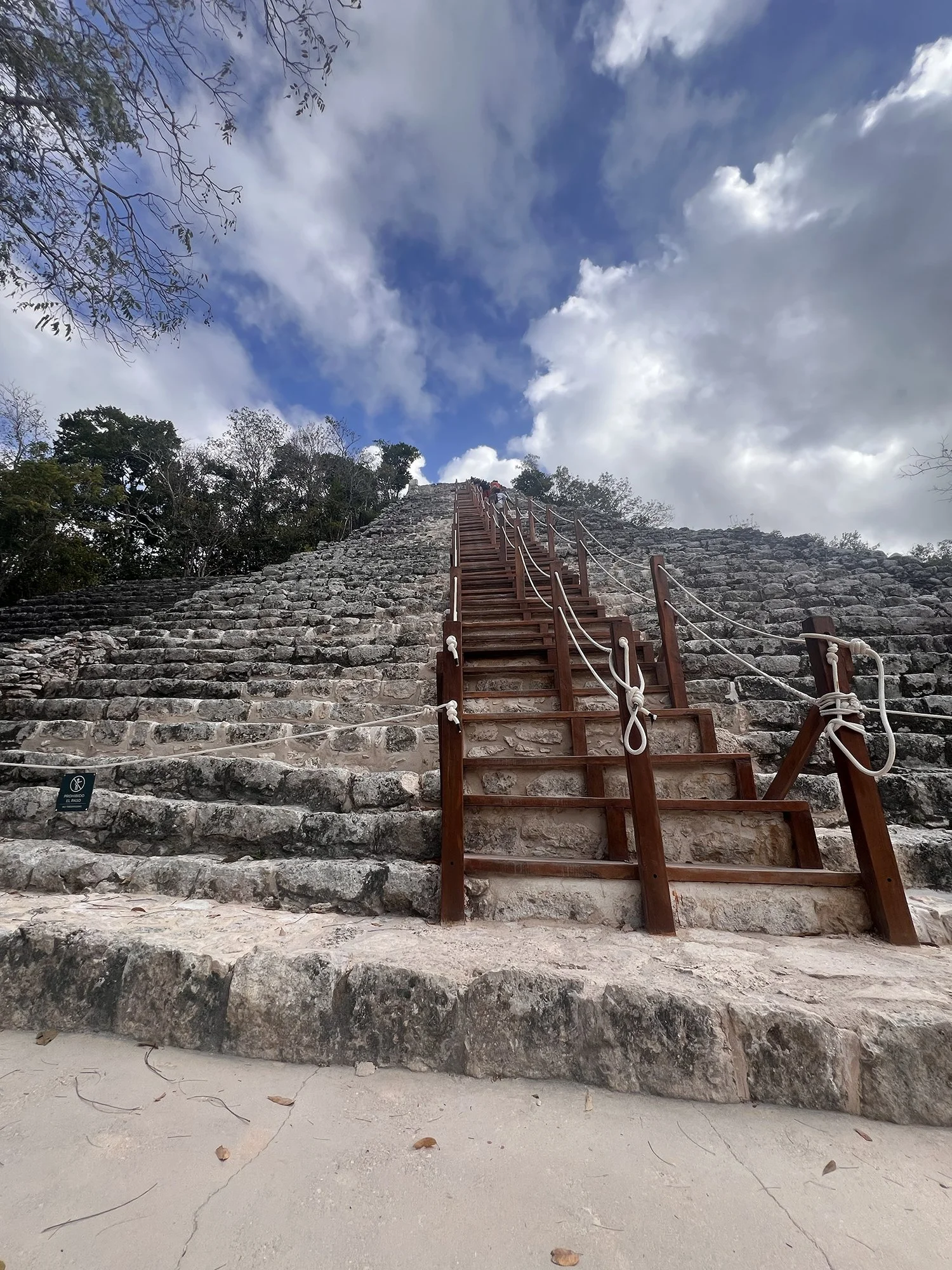
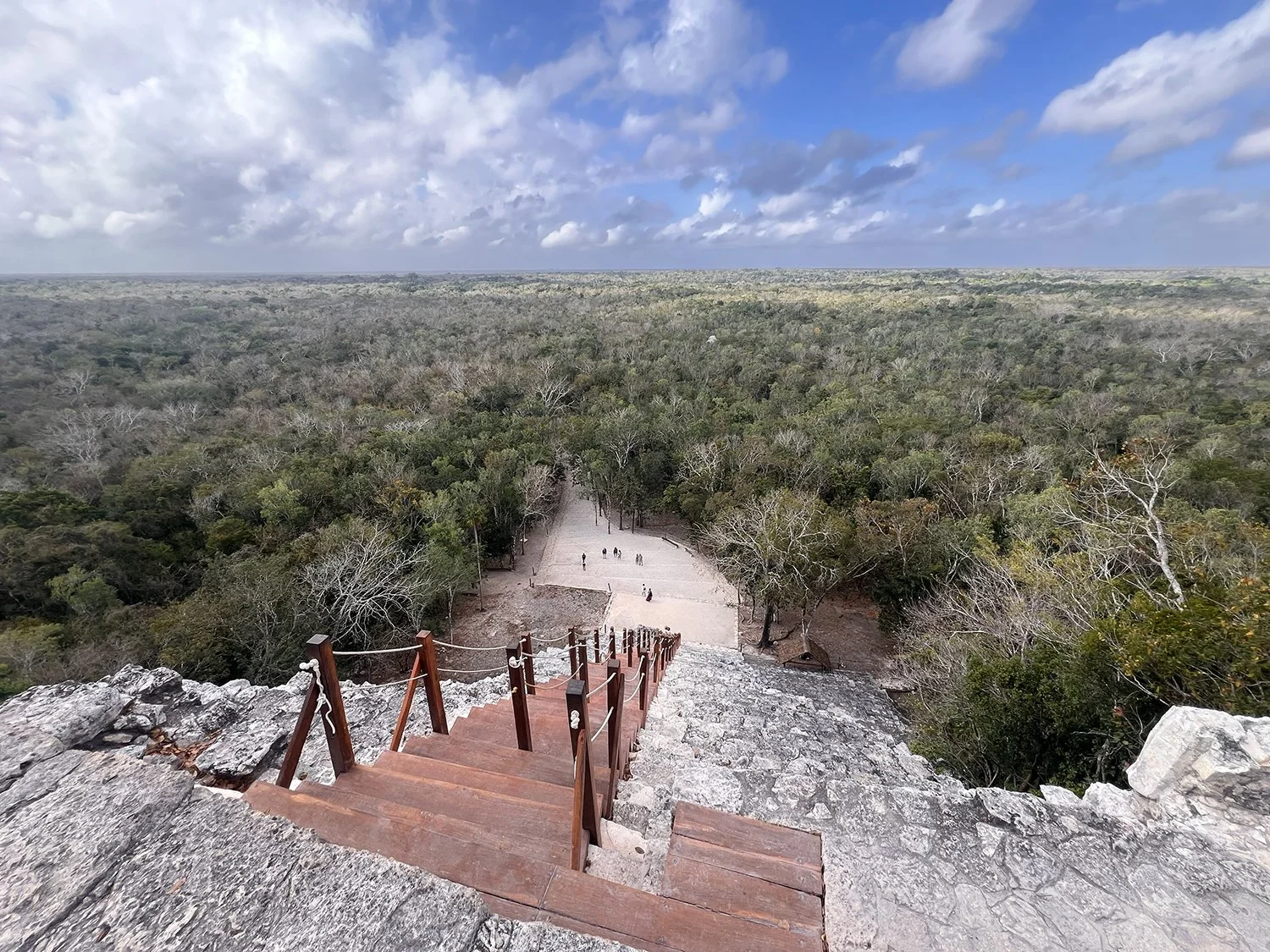
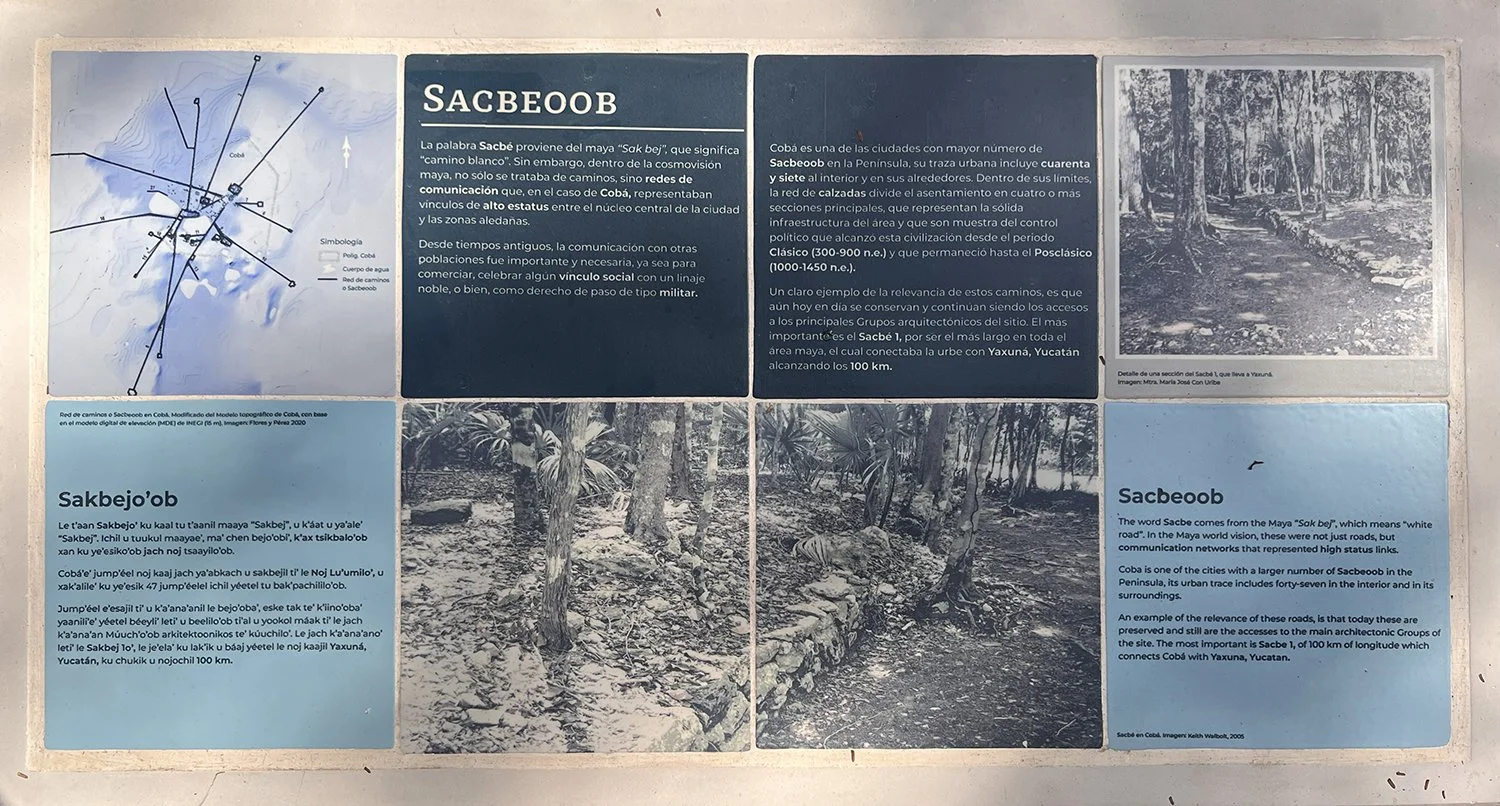
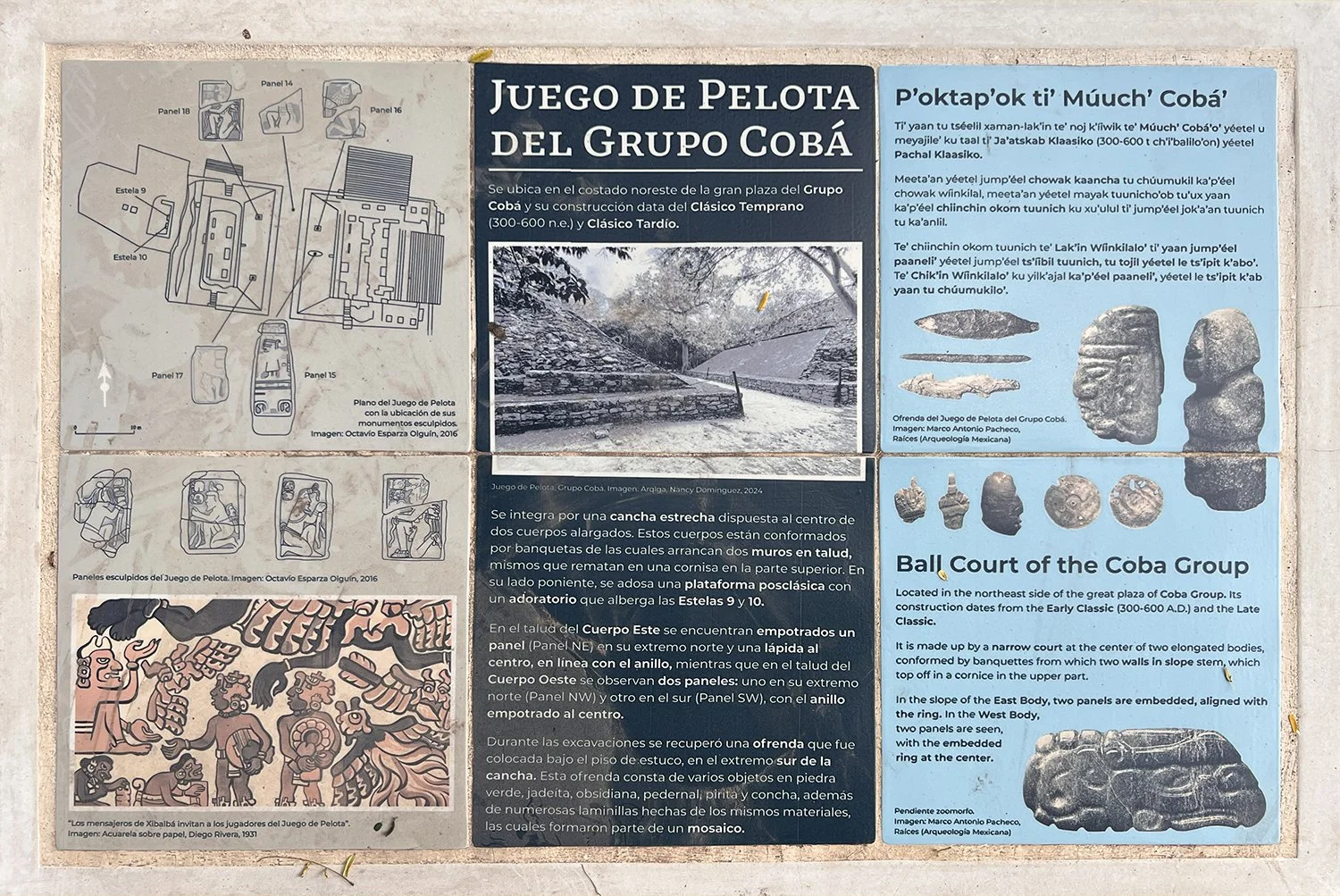
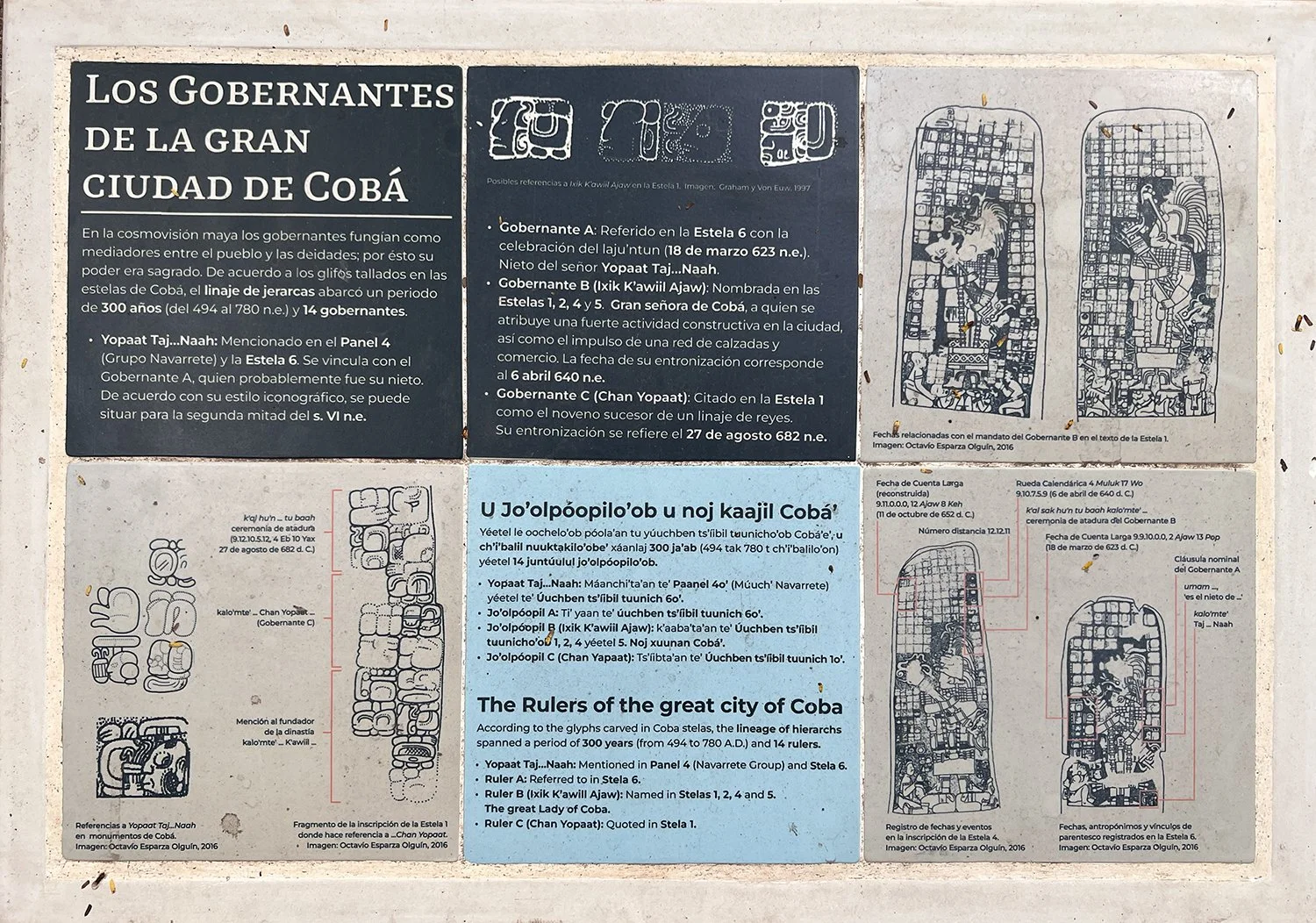
Raised stone roads extended through the forest, connecting ceremonial spaces, residential areas, neighboring settlements, and distant territories. Monuments established a sense of place and power. Carved glyphs preserved names, events, identities, and fragments of a history intended to travel beyond a single lifetime.
Surrounded by five lagoons and spread across approximately seventy square kilometers, Cobá developed as one of the most significant cities of the northern Maya lowlands. A network of elevated white roads, known as sacbe’ob, connected the city’s many architectural groups, while its longest known route extended approximately one hundred kilometers to Yaxuná. INAH’s archaeological overview of Cobá
This Field Study moves between those different scales of expression: the monument seen from a distance, the road disappearing into the forest, the carved symbol softened by time, and the graphic systems now used to interpret the site. Together, they reveal a place where movement, structure, image, and language were deeply connected.
Stone as a living archive.
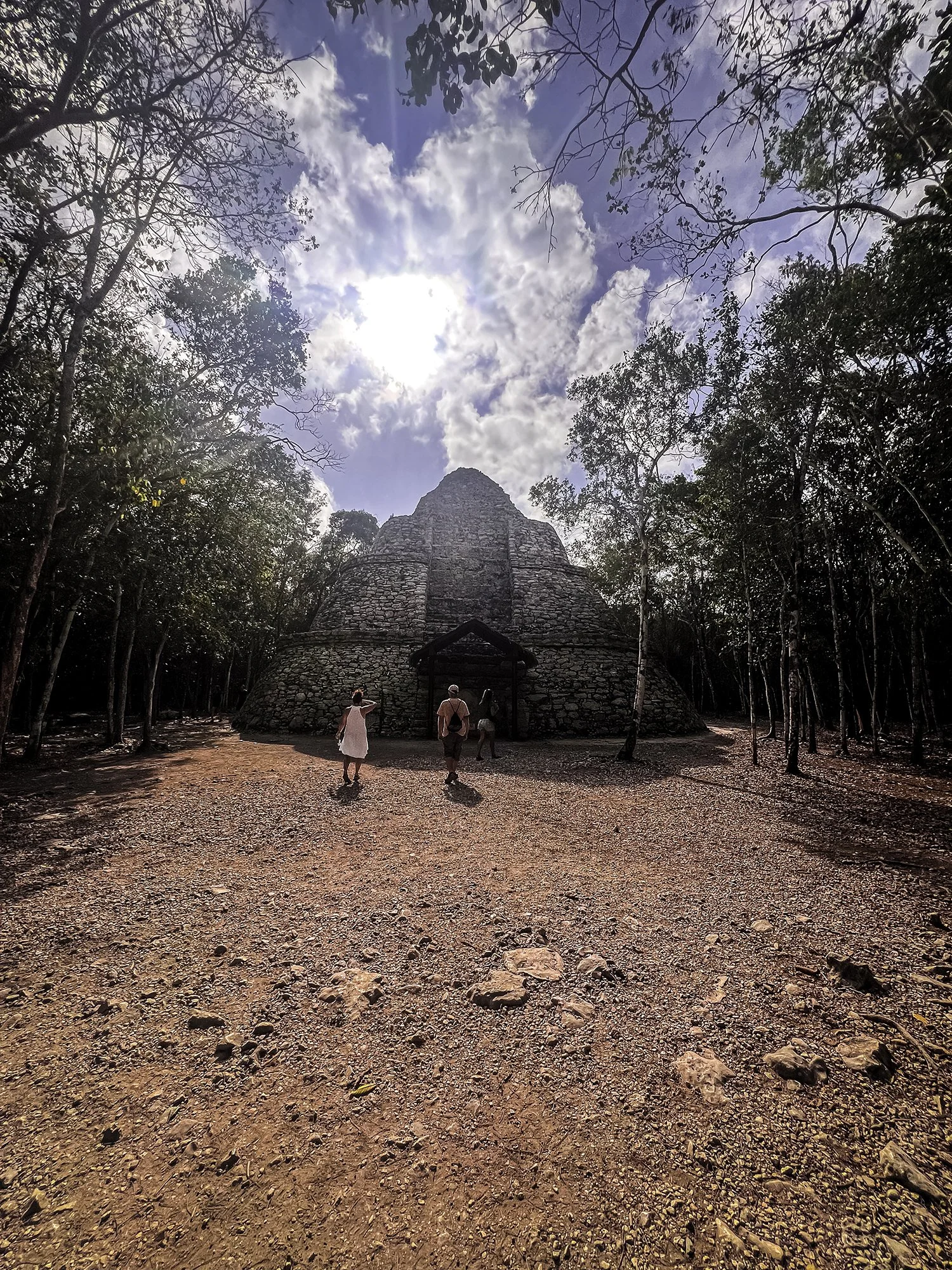
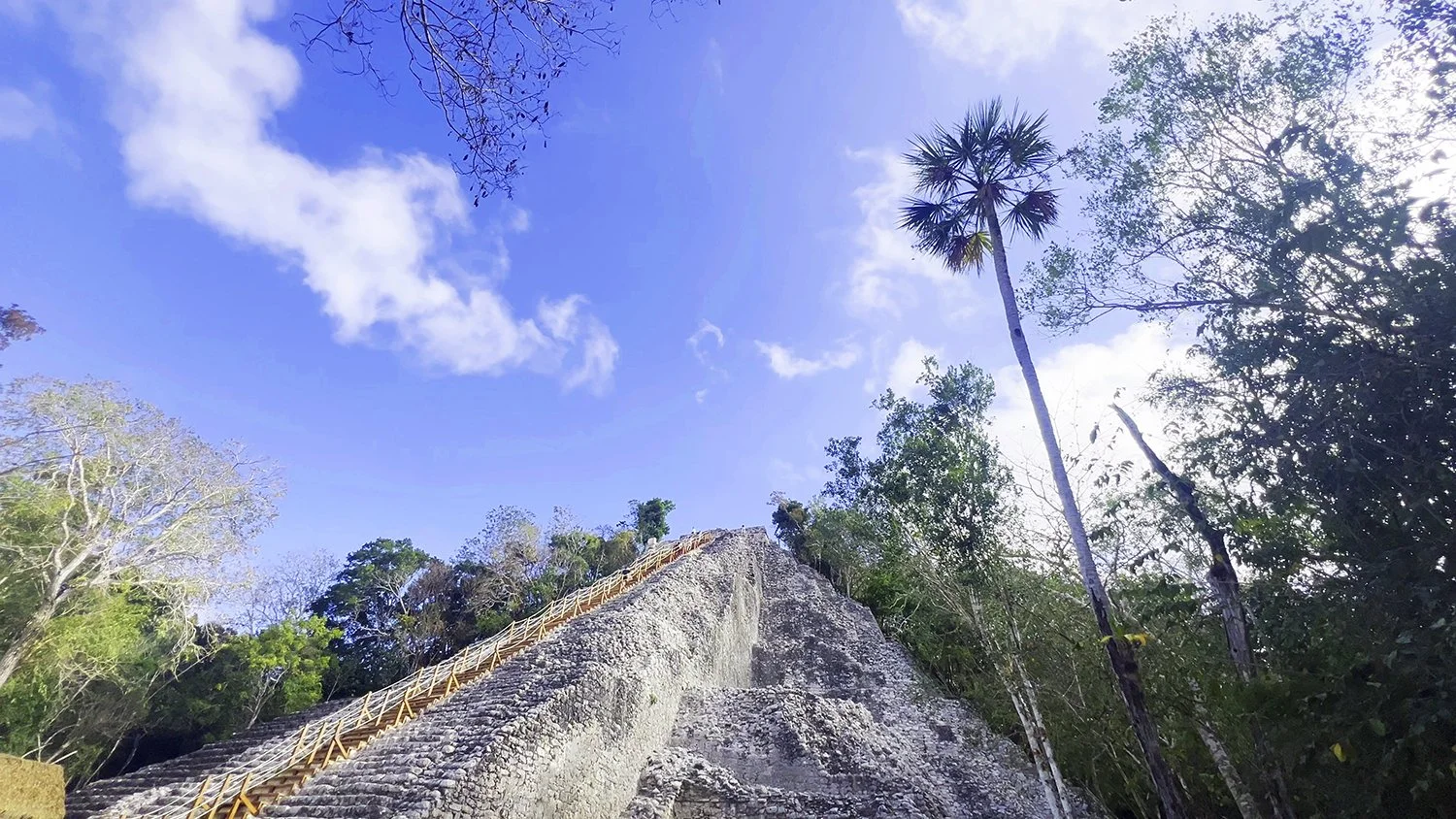
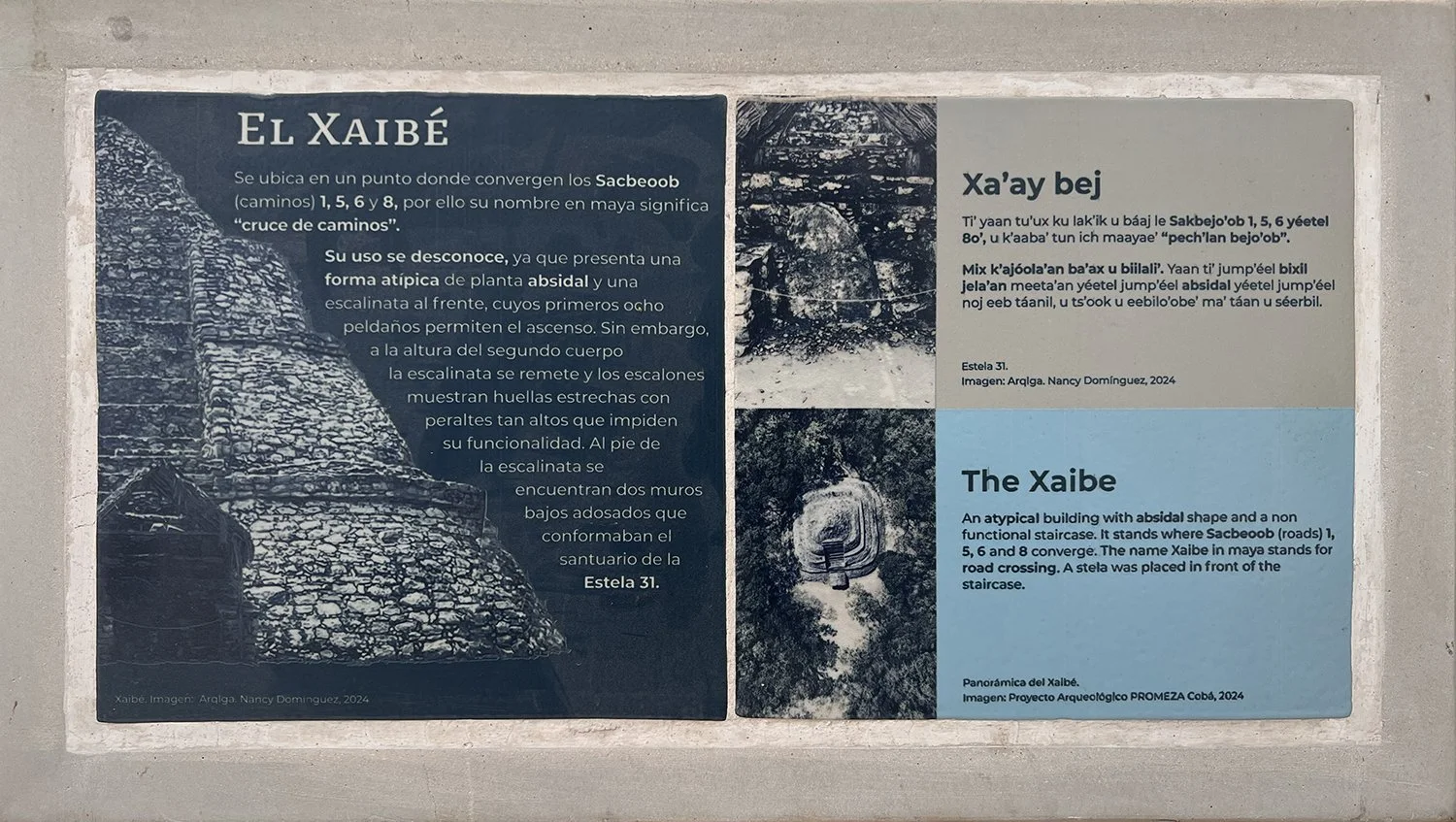
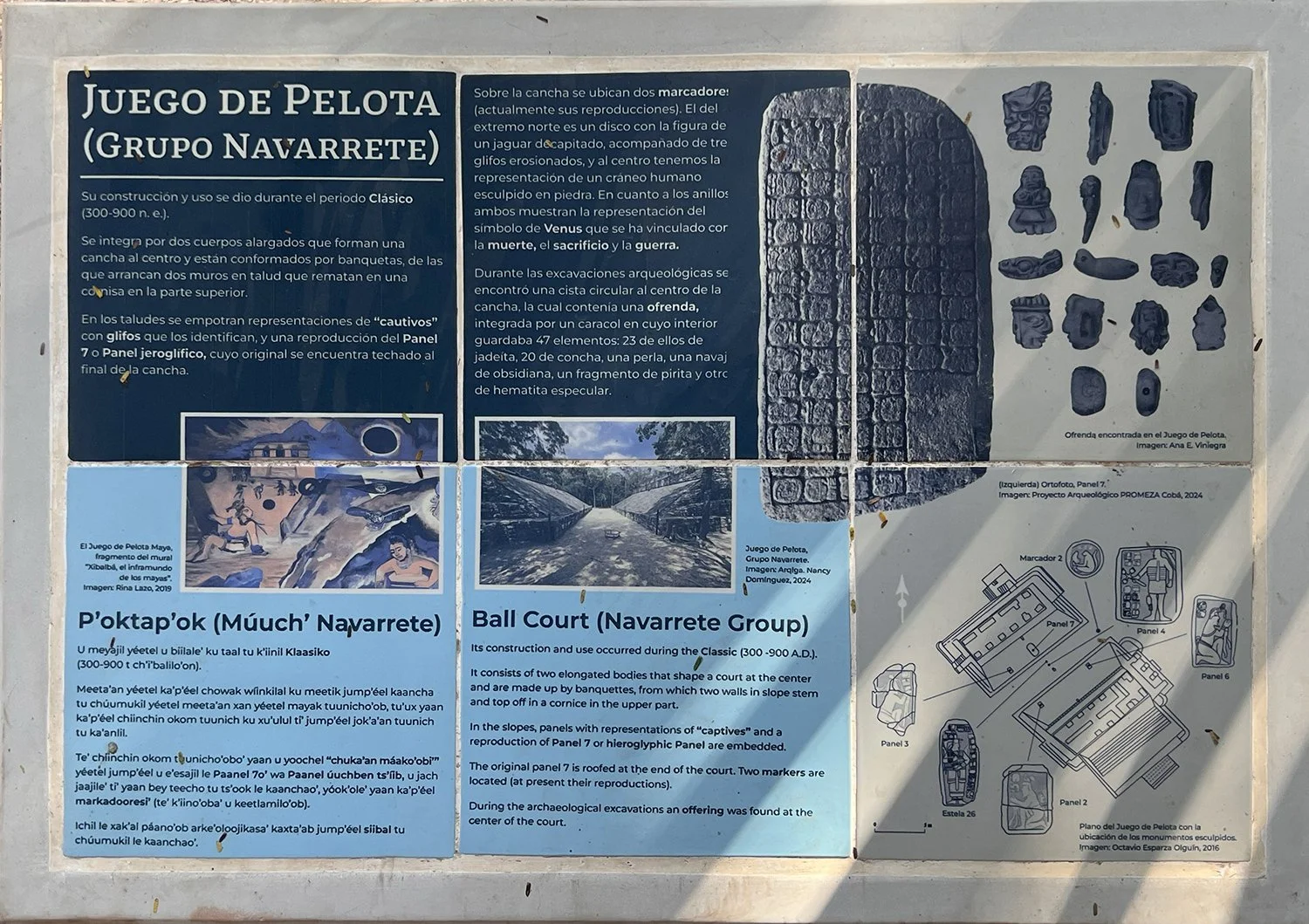
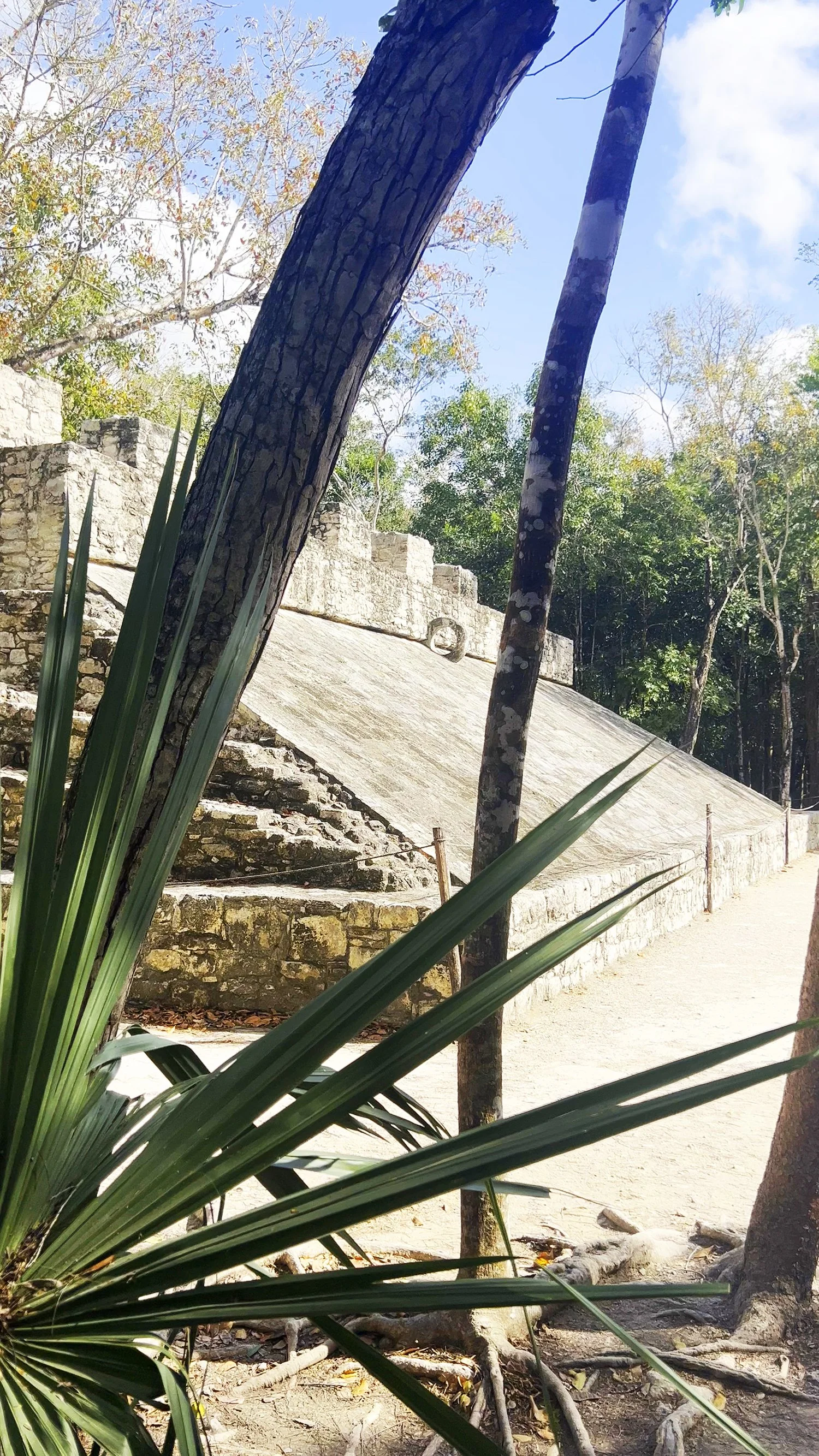
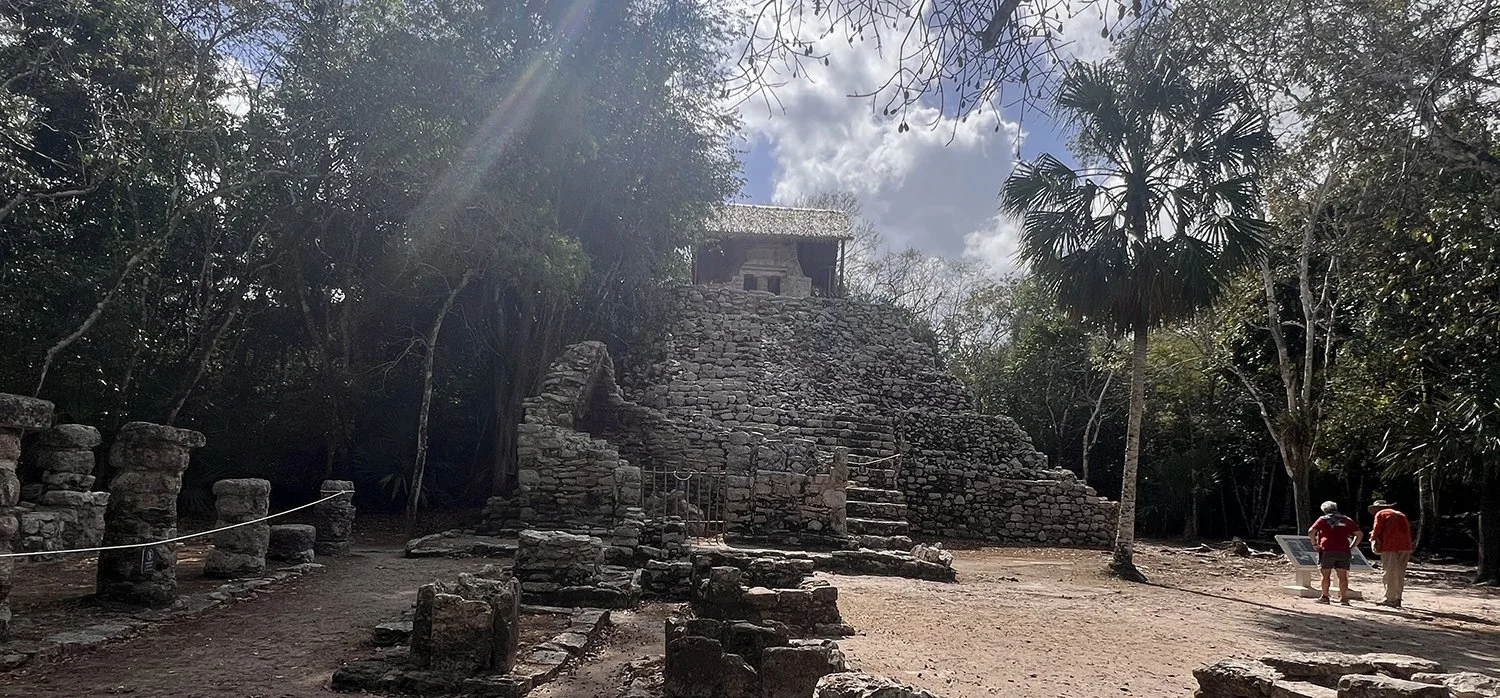
The monuments of Cobá were not created as silent objects. Their forms organized movement, framed ceremonies, marked authority, and gave physical presence to a shared understanding of the world.
Time has altered their surfaces but not their ability to communicate. Stone has weathered, edges have softened, and the forest has returned around them. What remains is incomplete, yet still active — a visual record continually studied, interpreted, and reconsidered.
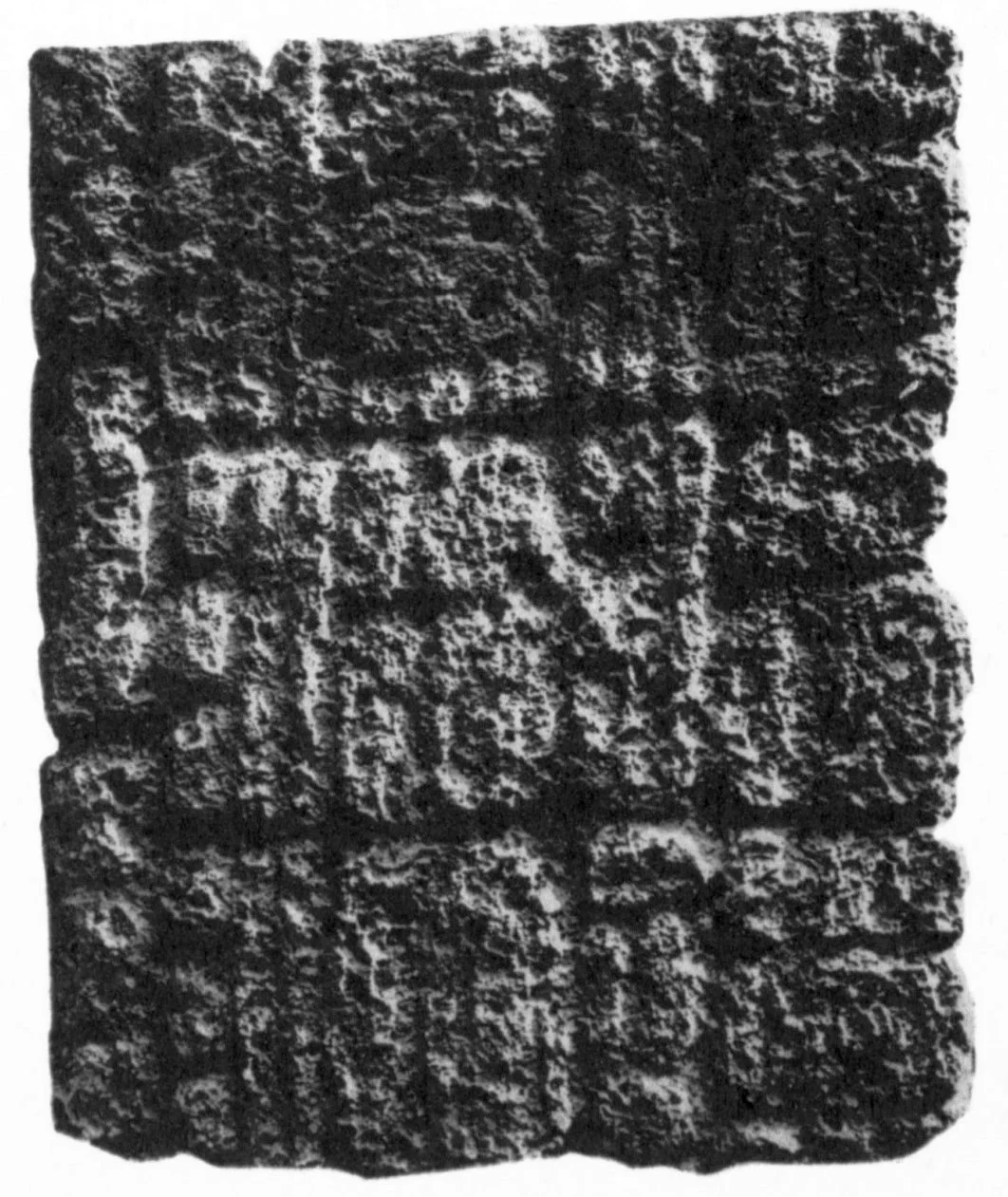
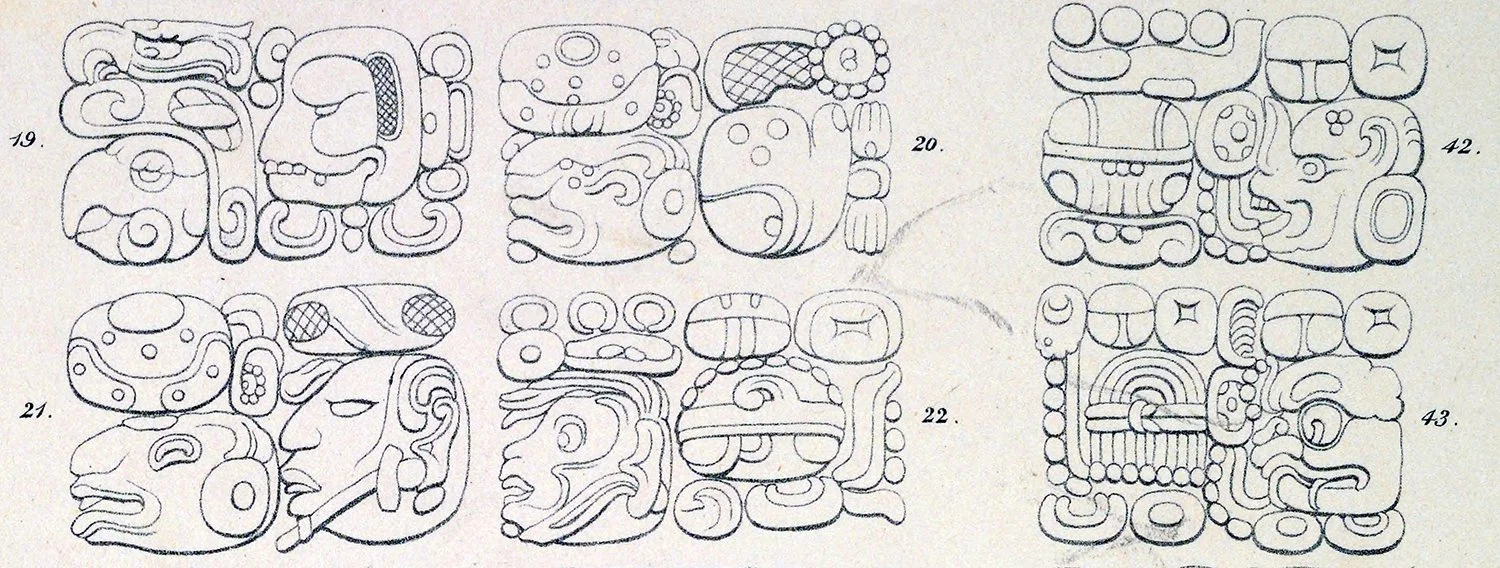
Reading the image.
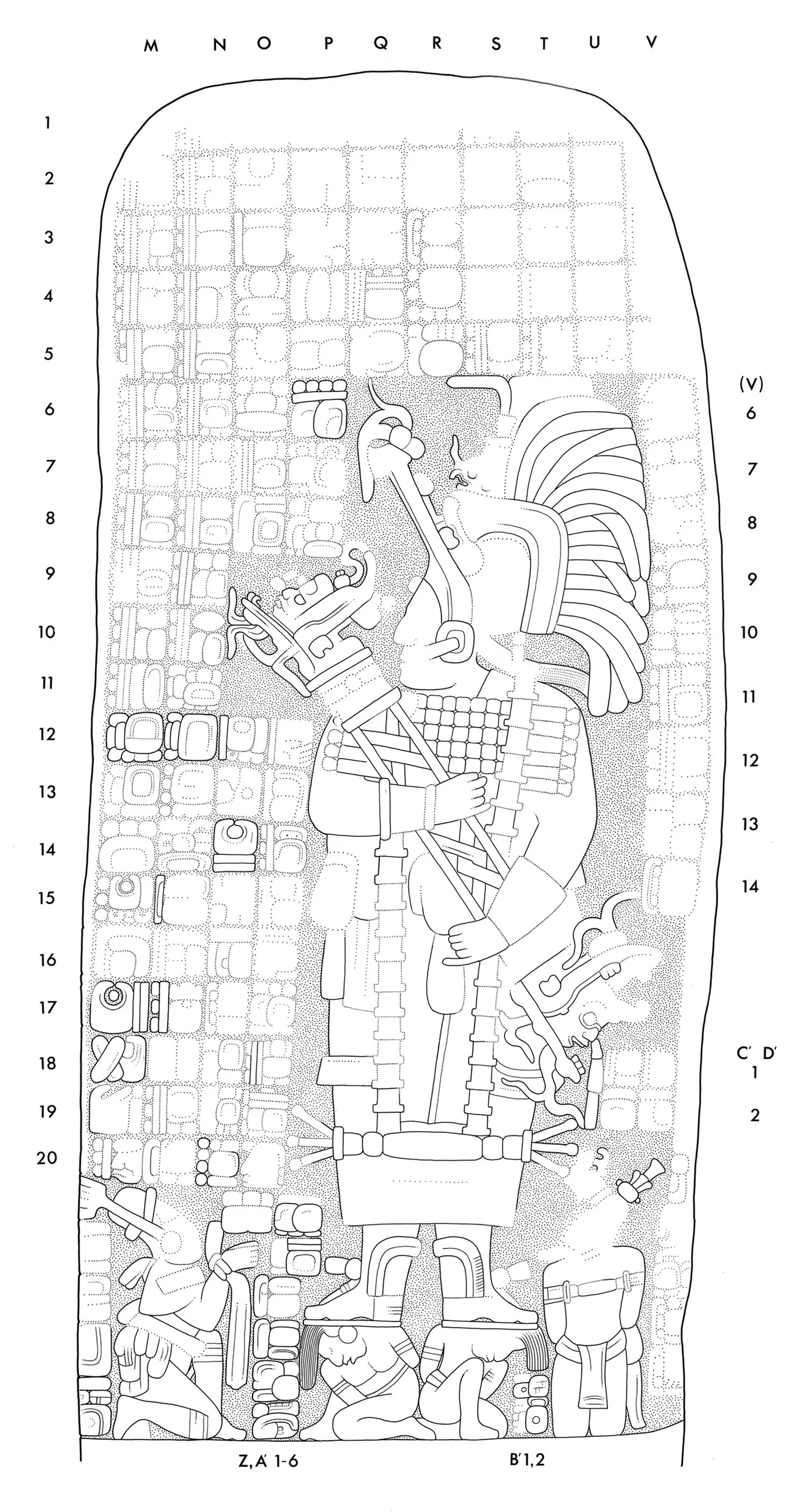
To an unfamiliar eye, Maya glyphs can appear almost pictorial: faces, animals, objects, and abstract forms compressed into intricate arrangements. But these were not illustrations in the conventional sense. Maya writing combined signs representing complete words with signs representing spoken syllables, allowing image, sound, and language to occupy the same visual space.
This relationship between drawing and writing feels especially resonant from a contemporary design perspective. Each glyph functions as both information and image — structured, expressive, and made to be read. Meaning exists not only within the individual mark, but in its sequence, placement, scale, and relationship to the surrounding architecture.
The language is ancient, but the underlying creative impulse remains familiar: to give thought a visible form and preserve it beyond the moment in which it was made.
The archive continues to unfold.
Cobá is not a closed historical record. Archaeological research continues to reveal new dimensions of the city and its written history.
In 2024, researchers documented an extensive panel near Nohoch Mul
containing 123 hieroglyphic cartouches. The inscription references
the founding of a settlement called Keh Witz Nal in 569 CE and identifies
a previously unknown ruler named K’awiil Ch’ak Chéen —
a reminder that the stories held within Cobá are still being recovered
and translated.
Read the INAH discovery report

Closing reflection.
Cobá offers more than the remains of an ancient city. It reveals a complex visual culture in which architecture directed movement, roads carried exchange, and carved symbols carried memory.
The site asks us to explore slowly and to recognize that communication can exist within a mark, a material, a path, or the space between structures. Even when a language cannot be immediately read, its presence can still be felt.
Cultural Resources
Instituto Nacional de Antropología e Historia
INAH researches, conserves, and protects Mexico’s archaeological, anthropological, and historical heritage. Its Cobá resources provide additional context on the city’s architecture, monuments, road system, and continuing archaeological study.
Archival Imagery
Cobá, Stela 1 — back, glyphs A8–B10. Public Domain. Maya Hieroglyphic Text and Image Archive, Universitäts- und Landesbibliothek Bonn.
Comparative Archival Reference
Copán, Stela A — inscription drawings, glyphs 19–22 and 42–43. Public Domain. Included as a comparative example of Maya hieroglyphic writing; not associated with the Cobá archaeological site. Maya Hieroglyphic Text and Image Archive, Universitäts- und Landesbibliothek Bonn.
The Archive Continues to Unfold from the INAH discovery report
Image: INAH / Secretaría de Cultura, 2024. Used for editorial reference.